Tuesday, September 28, 2010

iPadding the Future

(Gerry - since posting this Paul Melcher on his blog Thoughts of a Bohemian has posted Oct. 20th, "Beyond Metadata" worth a a read)

I have been accused of having shiny-object-syndrome. If I were 10 it would be simply AD of the HD. If you were ten 40 or 50 years ago they simply call it curiosity. Maybe that's why if you look around you see 40, 50, 60 year olds creating a pretty curious world full of things like the internet, cellular global communication, and stuff like touch-screen iPads.

But back to my focus issues for a moment. Focusing, I have always struggled with it. Having a laptop in front of me with Google open is the same as walking around in a tropical rainforest - I get excted about every thing that flutters past, flits by, crawls through my perception. I can barely read through a paragraph without highlighting and clicking a search for that word or idea and there I go - I'm off in a new wondrous direction. Unfortunately I have no light filtering through the canopy enabling me to "check in" once every so often and remember where I am, where I've been, and, oh ya, where I was going.

So I look at the iPad with trepidation - but I also know that somewhere in there lies my future. Not maybe the iPad itself, but the rainforest it will give birth to in a few short generations. As the iPad was nearing reality a photographer friend Michael and I had a pint and "it" came up and consumed much of the conversation. It was both the iPad and the rainforest. Ya see we are trying to figure out the future of our creative work, in turn a living from it, in turn our financial ability to continue the creative process. We came to a collection of conclusions, one was that quality would eventually be critical. But many conclusions rested on the creative inspiration of others - primarily the new publishing world; and I use the word publishing with considerable reservation. This snippet from media writer Colby Hall touches on the foundation of it, and slides forward in the direction we need to focus:

The question that publishers should be asking themselves regarding the iPad, and other tablet platforms, is not “how do we put our magazine on this device?” It should be “how can we best replicate the brand experience of our title, using the full suite of technological advances afforded by this new platform?” Follow up questions would include notions that would have previously been considered bizarre, like “What does our magazine sound like?” and “How many video advertisements is too much next this block of type?” (Because video stimulation hits the lizard part of the brain much quicker than the most well crafted and moving essay ever will.) It’s sad, but true.
Most of the web is frustratingly pathetic. On one level I understand and accept that because of the boxed minds that developed it. These were not audio visual people. That's why the web has been a hopeless place for kids. Kids are curious, the web is not designed in a curiously thinking way, although, as I said, a rainforest may be a short evolution away. If it is the iPad is a nice little muddy path leading in there.

What Michael and I discussed was exactly what Colby eludes to, that is, "best replicate the brand experience", although we think not in replication (which still implies backwards thinking to me), but in more creative (forward thinking) terms like, 'how cam we make the image come alive for the viewer', or 'transport the viewer/listener on our journey', or 'challenge the visitor to think anew'.

Those are the challenges we photographers, audioists, animators, film-makers and writers face. After a decade sort of away from my craft I'm incredibly excited to be back creating, it is filled with newness: I shoot digitally in both still and HD video from the same camera, upload into software like Lightroom, geotag my creative movement around the globe and listen for audio opportunities. iPad, Galaxy, even now Galapagos are, like the latter name suggests, new niches of evolutionary opportunity, creatively we can't think in replicating terms, those creatures die out, but in wholly new species.

I think we went through an odd transitional phase, past couple decades, and we aren't completely through it, as publishers will attest, where quality was down-graded and volume became king. If you walk the perimeter of a rainforest you see a pretty messy place - tattered bits of the original forest, invasive species, strangler weeds, garbage, it can all look rather depressing. Seen a few decades in the future and the order is returning, the forest re-assumes control, or more likely, a new order is established. I think we are there, in that messy place of chaos, where it is extremely difficult to see, hear, think. But I can also see some sense of order, new order with elements of old, taking root, sprouting forth. There will be devices and delivery methods that need brilliantly created content, designed to be probed and explored, and the world will pay for it, in a way that enables creativity to thrive not just survive.

Friday, September 17, 2010

The Unseen Sea

It's been rather quiet over here since I started work in the Gulf - literally and figuratively I have been swamped. I fly back to Portland next week and will catch up with several posts in the works for here and my Gulf specific blog. In the meantime Jenn sent me this very cool site with a time lapse piece on the fog and cloud formations in and around San Francisco which I wanted to share called The Unseen Sea by Simon Christen - enjoy!

Wednesday, August 18, 2010

Gulf Oil Spill Project

Over the past week I have been racing forth and back across the Gulf Coast between Louisiana and the Florida panhandle searching out the impacts of the latest human disaster created from our short-sightedness in exploring alternatives to a petroleum based existence. The past week has been interesting - on multiple levels - travel and photography are just two.

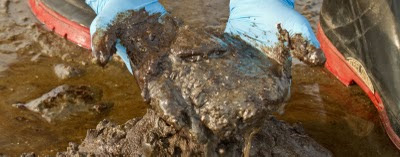
The BP Deepwater Horizon oil disaster caught the world's attention for the past couple months and then with the capping of the well greatest human cause environmental disaster began to slip from the media's attention and the worlds - here on the Gulf, especially in Louisiana it is still very much front and center - and as I saw Monday (Aug 16th), out on places like Grand Isle (photo above) it will be for years to come . We need to know who we are, what we have done, why we let it happen, and what is the long-term impact. That's why I came - I hope to help tell that story.

Over the coming weeks as I continue to understand what this disaster means to the Gulf Coast, human lives here, the food chain, and long-term impact on and to our cultural, political and social relationship to the environment I will be blogging about it specifically in a different site you can find here at the Gulf Oil Spill Project.

Partnering with me on the project is the National Audubon Society and photographic support is being provided by Pro Photo Supply (my blog about the photojournalism can be found here) - for each of those I will also be blogging and doing other presentations. As soon as those are up and running I'll post links to them here.

Finally this blog will continue to comment on my travels and observations on the planet - perhaps more, perhaps less, depending on the craziness of the schedule. It will take a new look soon as I will be migrating it to some new blogging tools which should provide you with more imagery, video, sound all to better experience the world I'm perambulating in and through.

Thanks to everyone who is along for the journey - Gerry

Tuesday, August 3, 2010

Gross Negligence - by whom?

You don't need to sit down for this, in fact most Americans won't even pay attention to the news, but here it comes...

The BP oil spill is the new world record holder for human inflicted environmental disasters. The spill has released just under five million barrels - an estimated 210 million gallons - of oil. That's 20 times more oil than was released during the Exxon Valdez spill--which previously held the record for the worst oil spill on U.S. territory. On top of that we have no estimate on the volume of methane gas poisoning the waters in and around the wellhead.
That figure "blows out of the water" the 3.3 million barrels released during the world's previous worst spill, the Ixtoc spill in the Bay of Campeche off the eastern coast of Mexico in 1979.

Writers Campbell Robertson and Clifford Krauss for the New York Times reported, the official estimate of the amount of oil spill means that BP faces fines of anywhere between $5.4 billion and $21 billion, depending on the degree to which federal investigators decide that gross negligence sparked the spill.

"Gross negligence", hmmmm?

Most Americans would say that's pretty obvious, isn't gross negligence spelled B P?

Negligence, yes, "gross", well I'm undecided. Certainly BP pushed the limits of safety, corporate ethics, destructive capitalism, and we will find out over time a whole host of other practices were compromised or simply toss overboard. But the blame for gross negligence maybe rests more broadly.

For true gross negligence I think we could start with elected officials over the past four to five decades who have failed to implement a comprehensive energy management plan for a nation (and in turn a world - we have been the leaders like it or not.) And then to the lobbying companies like auto makers who have slaved to profit margins, and insured those elected officials played along. But ultimately we have to look in our own rear-view mirrors at the people behind the wheel. WE. We elected official and didn't hold them accountable. We bought cars that ran on oil. We scream everytime gas smells $3/gal. - make it cheaper at "any" cost. We insured the system didn't change because it might be uncomfortable.

WE, you and me, are the ones responsible for the gross negligence.

Real gross negligence is being done by the media and the public indifference to a living planet that, from a human perspective, is being pushed to the limits of survivability. Just this past week the media has begun down playing the "great disaster" they so jumped on a couple months ago: "Where is all the oil?" an AFP headline asked. Time magazine ran a piece suggesting that the environmental impact of the spill has been "exaggerated." The New York Times ran a story that said the "Gulf oil spill is vanishing fast." Yahoo news ran a story suggesting that oil-starved microbes are gobbling up the oil. Anderson Cooper's CNN show ac360 is one of the few that has continued daily reporting from the Gulf Coast - and he too will likely pack up the mobile unit this week as BP looks to finally shut the well.

As for the longer-term, no one really knows what tomorrow's tide will wash up, that will take some drilling into, long into the future. The scientists are already taking sides, some optimistically portend that Mother Nature will mitigate the oils impact - but let's face it, you don't need and environmental PhD to grasp 5 billion of anything spilled into the environment unnaturally does damage, and to some creatures off our homo-centric radars, the damage could be terminal.

Brett Michael Dykes, who writes the Upshot for Yahoo News, reported that Doug Radar, the chief ocean scientist for the Environmental Defense Fund, told the Times Picayune that millions of gallons of oil remain unaccounted for.

"If you go back and look at the sheer amount of oil dumped - 60,000 barrels a day for 87 days - you get about 220 million gallons," Radar said. "Of that, 11 million gallons were burned and 30-some million were collected, meaning about 50 million gallons were eliminated. That leaves you about 175 million gallons of oil-based pollution loose in the Gulf. And when it degrades from the thick stuff you can see, that doesn't mean it's all gone. There's still an untold amount of toxins from that oil in the marine environment."
And what about that web-of-life we learned so much about in elementary school? That's the great mystery. Long-term it becomes broken links and chain-reactions, many beyond our best guesstimates. Researchers have already recorded that the Gulf's traditional summer dead zone - the annual dip in oxygen levels along the Gulf shoreline (due to Mississippi River runoff carrying agricultural fertilizer waste) - is twice as large as it was last year, representing an area the size of Massachusetts - stretching 7,722 square miles across Louisiana's coast well into Texan waters, scientists with the Louisiana Universities Marine Consortium announced yesterday (Monday).

So gross negligence? BP? My gut says the real criminals will never appear in court. The real crime is being perpetrated everyday by roughly 300 million Americans who won't accept a new energy-use paradigm. 300 million Americans who greedily refuse to become participants (better leads) in a global solution to living sustainably on this planet. The real gross negligence -- the courage-less creature at the wheel of the vehicle that creeps along in our rear-view mirror everyday, around the world, at 8AM and 5PM.

PS - and what about that "other" giant nation consuming oil.
China has overtaken the United States as the world's biggest producer of greenhouse gases and biggest energy consumer, but they are searching for solution to the unsustainable -China Plans Huge Buses That Can DRIVE OVER Cars

Monday, August 2, 2010

Being American - None of US are Islands Alone

I saw a movie last night that struck several cords from joy to frustration to anger. All about people. Not one kind of people, them over there, they, but all people. And in that sense about Americans. Being American. What that means. What ever that means?

It's odd to have an island named after you that represented a door, a passage way, a gate to all those people, regardless of origin, color, perspectives, experiences. A word that dangled in the desire of faraway sleepless nights and unfulfilled dreams. Ellis Island. To so many it launched a freedom granted to you at birth, for no price, and you have never in all your global wanderings stepped foot there. Yes there, on that small, originally 5 acres, of terra firma that somehow meant more than all others; between 1892 to 1954 millions of people, a planet's worth, created the most remarkable crucible of human diversity our world has ever known: mixed with the poets and the thinkers, the scientists and the musicians, and farmers and shopkeepers, there were also bigots and hate mongers and those who would have you believe that theirs is the only American blood that flowed out of that remarkable crucible - that's the price of diversity - there are mosquitoes in the diverse beauty of the rainforest, and some of them carry malaria.

The Visitor is about the potential of continuing to give life to that remarkable crucible. The Visitor is a movie every American, illegal, legal, or by the luckiest miracle on Earth - of which you had no say in - you were born here. You paid no price for your luck - you can only pay it forward.
And do so like The Visitor "with impressive grace and understatement, resist potential triteness and phony uplift." Qualities you wish were the gifts of being born American.

I agreed with one reviewer who wrote, "The most remarkable part of The Visitor is the way it organically shows the way life can change un-expectantly, unfairly and without warning and does it with real, raw emotion. Just when you think you've figured out what the movie is about, you [are] slapped with a new reality. It is frightening, timely and angering. Even the ending, which is not the typical movie ending, is emotive in a subtle and realistic way. I was not overwhelmed or underwhelmed by the movie, I was perfectly whelmed; a task indeed."

Like living as an American.

The Visitor was released in 2007, that year roughly 1 million immigrants entered America, none of them look like you and me, all of them look like US. That same year 283,000 were detained - 85% of them did not have access to a lawyer - their crime was dreaming of the crucible. That year there were 10,350 immigrant children placed in the custody of the Department of Health and Human Services.

The goal of all this? To protect US from terrorism, the them, the there. The price? The crucible crumbles and diversity dies.

*****
A footnote of comparison: On September 11th, 2001 the them destroyed 2,973 lights of imagination and hope and joy in the crucible of diversity. By comparison that same year the them (drunk drivers) destroyed 17,448 lights of imagination and hope and joy in the crucible of diversity. The latter terrorism has continued every year since, and still.

Friday, July 23, 2010

BP Announces New Summer Movie Release: Silence of the Scientists

I really don't know where to begin this, so like a good writer, when stuck, just start writing and then eventually ya hit a grove. Of course, like a good writer, the alternative is to walk down to the pub, grab a pint or two and contemplate my ideas, hydrate my inspiration, then write. I'm opting for the first, since its 10 AM - not that that ever bothered Hemingway.

Here goes... I'll start with a question.

Is there a time when something is so off, its principals so clearly skewed as apparent by its actions (all that we know) in which we as a society need to stop and question its value in existing? Is it something we really need in our lives, in our world?

My background, my experiences are in nature, observing it, studying it, contemplating it, soliciting other perspectives on it. In nature the above question would be rhetorical at best, ultimately moot. The old saying goes "Nature abhors a void" but nature equally abhors anything mindlessly destructive to the system, all other life. The global petroleum company BP is treading down that path and perhaps it's time we as a society pause and consider its value in our lives, in our world.

In the past couple months the following information about BP activities has come to public light, and it's clear much more remains receding in the dim recesses.

  • BP abandoned almost all prudent safety procedures in deep water drilling in the Gulf of Mexico.
  • BP paid or insured few if any regulations governing their drilling activities in the Gulf of Mexico were know or under the scrutiny of the licensor (us hence the US).
  • BP continually has under reported the extent of the spill scope.
  • BP has, in coercion with local and government officials gagged the flow of information about the extent of damage along the Gulf Coast, including using coerced/paid local law enforcement to challenge, threaten and exclude journalists.
  • BP has pressured government in the UK for release of a know terrorist who's actions killed
  • BP is, still, working with the Lybian government on who's side it was pressuring the UK government to open the flow of oil leases.
  • BP is current trying to buy the silence of scientists regarding their research into the Gulf spill damage.
Yes, this last one hits home. I have always had a soft spot for scientists. I think they try more than most, to do something of value for humankind. So it's with complete outrage that I read BP officials have been quietly moving through the science community trying to buy the silence of the scientists faced with understanding and analyzing the impact of this spill nightmare.

BP said it had hired more than a dozen scientists "with expertise in the resources of the Gulf of Mexico," according to a statement given to the BBC. That's great, get real scientists at work on this mess. But that isn't their objective apparently. According to a BBC report:

Bob Shipp, the head of marine sciences at the University of South Alabama, said BP's lawyers had approached him and wanted his whole department.

"They contacted me and said we would like to have your department interact to develop the best restoration plan possible after this oil spill," he said.

"We laid the ground rules - that any research we did, we would have to take total control of the data, transparency and the freedom to make those data available to other scientists and subject to peer review.

"They left and we never heard back from them."

Nelson warned BP's actions could be "hugely destructive".

"Our ability to evaluate the disaster and write public policy and make decisions about it as a country can be impacted by the silence of the research scientists who are looking at conditions," he said.

"It's hugely destructive. I mean at some level, this is really BP versus the people of the United States."

So where does it stop? I return to my original question,

Is there a time when something is so off, its principals so clearly skewed as apparent by its actions (all that we know) in which we as a society need to stop and question its value in existing? Is it something we really need in our lives, in our world?

Sounds ludicrous you think. We would just remove a company from our planet. Why not? BP now equates to BioPoison - life threatening. It's not infected every last worker, but clearly it has become what all corporations run the risk of, slipping off the tightrope, losing balance. BioPoison infects the inner ear, one no long hear the voice of reason and right, one loses balance. Their record is illustrating they have been tiptoeing that thin tightrope corporations balance on so precariously, only maintaining balance based on the collective conscious of a few men and women to listen to the inner ear, and realize their decisions do destroy with equal severity as they do value.

BP has lost balance, they're falling and like any one who does they desperately flail about, grasping at anything and everyone for hope of stability. The result is they take us down with them. Despite our hardwired human urge to save - this time we need, hold back our hand, look away, to let them go.

Tuesday, July 20, 2010

BP Lies vs Mistakes: The PhotoShop Cunundrum

Sometimes something smells so foul that it needs to be aired (out) on as many blog laundry lines as possible. Below is such a case. The original text and images (below intact) first appeared on a Yahoo blog by Brett Michael Dykes - and congratulations to John Aravosis of AMERICAblog for astutely catching Bad People doing yet more Bad Pr and first posting this. I won't rant on these PhotoShop "mistakes" here - I've said my fill before.

BP caught using altered image of command center

BP  photoshop

Is a picture worth more or less than a thousand words if it's Photoshopped?

John Aravosis of AMERICAblog made an interesting find Monday night: A high-resolution image on BP's website of the troubled company's Houston-based Deepwater Horizon response command center had been altered.

The altered image was later removed by BP and replaced with what they say is the original (the altered image is above and the original is below). You'll notice that three underwater images were inserted onto screens to the right on a wall of video feeds in the altered image, where blank images exist on the screens in the original.

The photo flap inspired the usually staid Washington Post to quip, "Apparently BP is no more adept at doctoring photos than it is at plugging deep-sea oil leaks."

BP spokesman Scott Dean told the Post's Steven Mufson that there was no diabolical plot to photographically beef up the company's command center. Rather, he said, a BP photographer with completely benign intentions just slipped the images in.

[Animals most threatened by Gulf Coast spill]

"Normally we only use Photoshop for the typical purposes of color correction and cropping," Dean told the paper. "In this case they copied and pasted three ROV screen images in the original photo over three screens that were not running video feeds at the time."

He added, "We've instructed our post-production team to refrain from doing this in the future."

(Pictures courtesy of AMERICAblog)